Software Engineering
Nearshore Talent as an Enabler of Scalability, Efficiency, and Operational Continuity
15 July 2026 | Por Possumus
How Nearshore Talent in Argentina Drives Scalability, Reduces Costs, and Ensures Operational Continuity
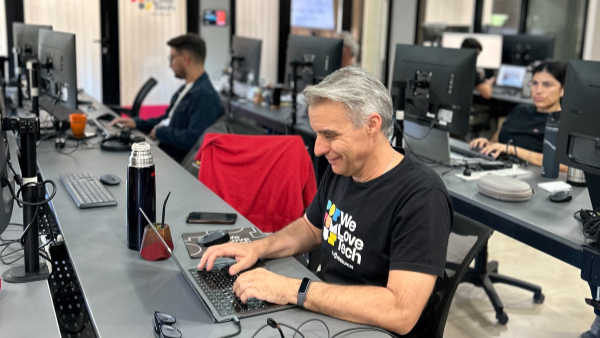
Scaling a corporate technology platform requires speed, but the need to accelerate deployments often collides with an expensive and saturated labor market. The real challenge lies in integrating specialized teams that understand the complexity of legacy industrial environments without compromising the operational budget. Remote collaboration models like nearshore talent offer an efficient path through strategic engineering partners located within the same time zone.
Historically, outsourcing focused on finding the lowest hourly rate available in distant regions. This approach often led to hidden costs, communication barriers, and project delays. The evolution of this model has brought us to nearshoring, a strategy that delivers business agility and access to top-tier talent that shares time zones and cultural alignment with the North American market.
Argentina has emerged as a regional technology hub. With a highly skilled workforce that is continuously upskilling, the region offers a strong alternative for companies requiring ongoing technical support and modernization of complex systems. Choosing the right strategic partner enables organizations to bridge the talent gap and execute their digital transformation projects with confidence.
In this article, we explore how nearshore talent can optimize technology integration, reduce operating costs, and ensure continuity in high-demand industries.
Nearshore Talent: How It Transforms Engineering
Software engineering requires rapid iteration cycles, real-time collaboration, and frictionless communication. The traditional offshore model, with providers located in countries such as India, presents challenges. Time differences of up to 10 or 12 hours often limit real-time interaction, which can slow down decision-making in agile environments.
By contrast, Argentina offers a competitive advantage for U.S. companies. Argentine engineers share most of the workday with the United States, enabling daily sync meetings, coordinated software deployments, and faster responses to critical incidents with reduced operational latency.
The maturity of the engineering ecosystem in the region has aligned with globally adopted operational practices. According to a Deel Lab report and World Economic Forum data, more than 2.2 million remote professionals from Argentina, Brazil, and Mexico actively worked for global companies from their home countries in 2023.
Argentina has solidified its position based on four key factors:
- Active technical workforce: Argentina has a base of more than 140,000 actively working software developers.
- Sustainable talent pipeline: An academic system strongly focused on STEM disciplines.
- Language proficiency: High levels of professional English proficiency.
- Specialization in adoption: Teams with experience in modern data architectures, cloud engineering, AI, and cybersecurity.
For North American organizations, integrating distributed engineering squads through nearshore talent reduces fixed recruitment costs and ensures that product roadmaps maintain their deployment pace.
Strategic Benefits of Scaling with Nearshore Talent
Scaling a company’s technology capabilities should not mean exponentially increasing operational risk or overhead. The nearshore talent model strikes the perfect balance between resource expansion and financial optimization, ensuring that every technology investment delivers measurable results.
Seamless system integration
One of the biggest operational challenges for mid-sized and large companies is connecting legacy infrastructure with modern cloud-based solutions. When integrations are executed by distributed engineering teams operating in real-time alignment (CST/EST), technical knowledge transfer becomes continuous.
This approach enables API design, event-driven architecture implementation, and microservices migration to progress incrementally, minimizing disruption risks when combined with good practices on deployment and testing. The value lies in planning adoption as part of daily engineering workflows, allowing systems to integrate naturally into business operations.
Reduced operating costs and maximized ROI
Building in-house teams in North America involves high costs related to recruitment, infrastructure, benefits, and retention. Nearshore talent converts fixed expenses into variable costs that can scale with business demand. Companies can achieve savings between 40% and 60% in direct labor costs by partnering with professionals in Latin America, without compromising technical quality.
Cost optimization goes beyond hourly rates. By reducing hiring timelines and onboarding processes, software projects begin delivering value in weeks rather than months. Companies can reallocate savings toward innovation, research, and development initiatives, maximizing the return on their IT investments (ROI).
Security and compliance
Protecting critical data and meeting industry regulations are essential. Some organizations hesitate to expand teams beyond their borders due to concerns about vulnerabilities. However, mature nearshoring partners operate under the most stringent global standards.
At POSSUMUS, we apply advanced cybersecurity measures. Our Nearshore teams have experience in secure development practices (DevSecOps) as well as implementing frameworks such as Zero Trust, tailored to each architecture’s requirements.
Nearshore Talent in Your Organization
Successfully implementing a nearshoring talent model requires aligning business objectives with the provider’s technical capabilities. The process begins with a comprehensive assessment and culminates in the creation of a resilient, integrated technology ecosystem.
Assessing legacy systems and nearshore talent needs
Before initiating any modernization effort or staff augmentation, it is critical to understand the current state of the IT infrastructure. This assessment identifies technical bottlenecks, security vulnerabilities, and data silos that limit growth.
Once the infrastructure is mapped, leaders can define the exact profiles they need to incorporate.
Strategic alignment with the Microsoft ecosystem
Enterprise scalability depends heavily on the underlying platforms. Many of the world’s largest organizations rely on the Microsoft ecosystem to power their daily operations. Maximizing this investment requires certified expertise.
As a Microsoft Solutions Partner, POSSUMUS brings validated technical expertise in Azure-based architectures, enterprise tool integrations, and cloud-native development. Nearshore talent teams in Argentina are continuously trained in the latest Microsoft innovations, including AI applied to business. This strategic partnership ensures optimal application performance, smoother cloud migrations, and the development of highly secure digital work environments.
Integrating technical support through Nearshore Talent
Companies operating global services or SaaS platforms must ensure constant availability for their users. Internal teams can become overwhelmed trying to cover all shifts, leading to burnout and service degradation.
Integrating nearshore talent enables a continuous support coverage model. Engineers handle maintenance, security patch management, and troubleshooting across different time zones. With reliable teams that share the same work ethic and problem-solving methodologies, IT leaders can focus on long-term strategy, confident that daily operations are continuously monitored and protected.
Build a Scalable Future for Your IT Infrastructure
Adopting nearshore technology talent has evolved from a simple cost-saving measure into a competitive advantage.
By choosing Argentina as your nearshore talent hub and POSSUMUS as your strategic partner, you can ensure seamless technology integration and enterprise-grade support. Contact us.


Products


Copyright © 2026 Possumus. All Rigths Reserved.
Join Us


